







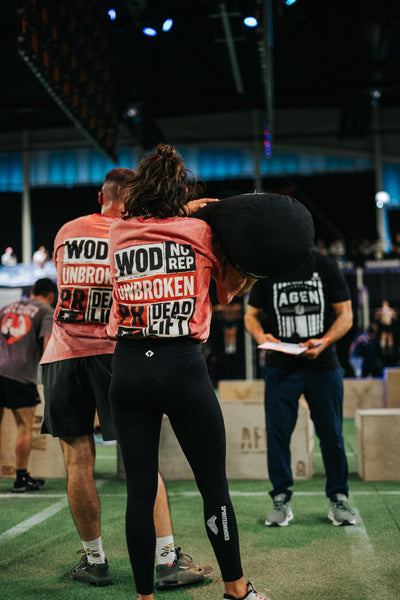
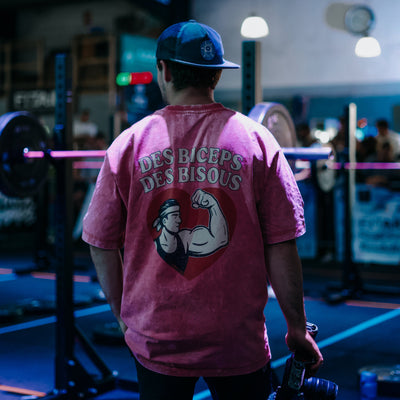
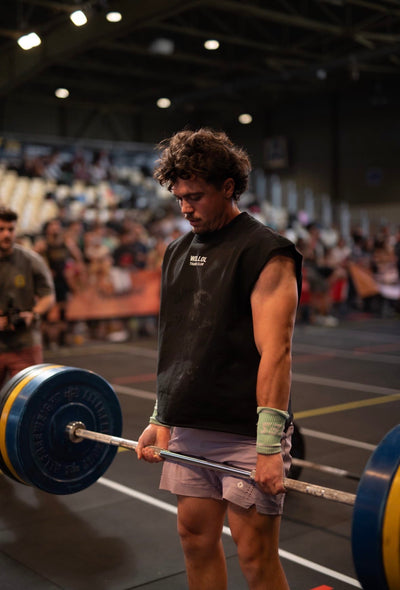
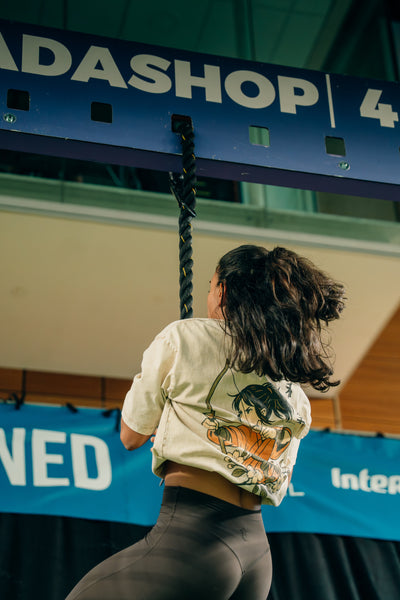






Training in winter: hoodie, sherpa or puffer, what to wear before, during and after the WOD
In winter, there are two kinds of athletes: those who turn up at the box in a t-shirt “because it'll warm up” and those who keep their puffer on until the last round. Both are wrong. Here's how to dress to train in winter without shivering through the warm-up or cooking during the WOD.
⚡ In short
- The 3-layer rule: a breathable layer for the effort, a hoodie for the warm-up, a jacket for the commute.
- Hoodie weight: 300 to 380 g/m² for the box, 400 g/m² and up for outdoors and post-session.
- The sherpa and the coat are for the commute and downtime at comps, not for the WOD.
- The biggest risk in winter: staying wet after your session. Bring a dry top.
The 3-layer rule
| Layer | When | What |
|---|---|---|
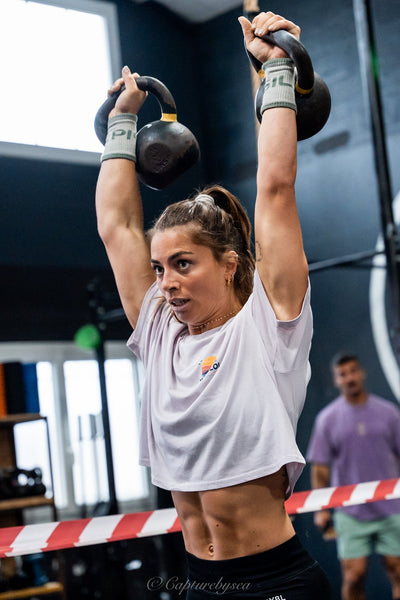
| 1. Effort | During the WOD | Breathable oversized tee, tank or crop |
| 2. Warmth | Warm-up, rest between sets | Hoodie or sweatshirt |
| 3. Protection | Commute, outdoors, downtime | Sherpa, jacket, coat |
The principle: take a layer off when you warm up and put it back on as soon as you stop. Your body cools down fast after effort, especially in a sweat-soaked top. We already covered this in our autumn guide: winter follows the same logic, with one more layer.

Choosing your training hoodie: fabric weight, the number nobody reads
Fabric weight (in g/m²) tells you how thick the fabric is. The higher it is, the warmer, heavier and more structured the hoodie.
| Weight | Feel | Best for |
|---|---|---|
| Under 300 g/m² | Light | Spring/autumn, under a jacket |
| 300 – 380 g/m² | Thick and comfy | Box, warm-up, everyday |
| 400 g/m² and up | Very thick, heavy drape | Winter, outdoors, post-session |
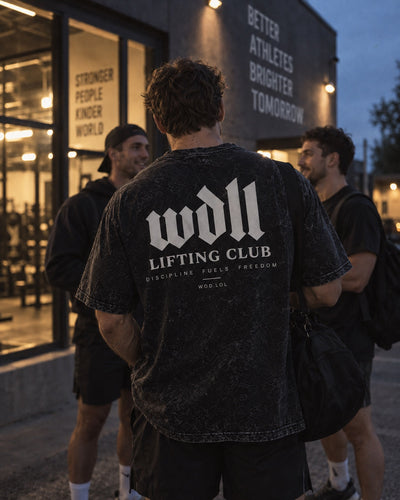
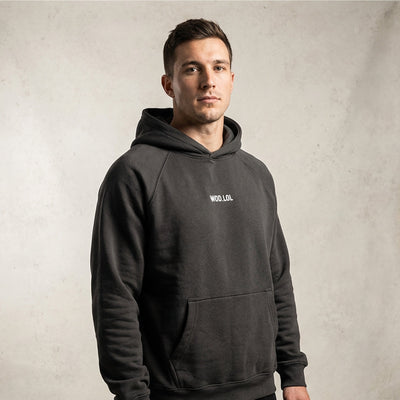
To give you a benchmark, our Classic Hoodie is made of 380 g/m² fleece and the WDLL hoodies go up to 440 g/m²: enough to get through an outdoor warm-up in December.
🧥 Oversized fit: a roomy hoodie goes over a tee without squeezing your shoulders during the warm-up. Remember to check the measurements in the size guide.
Your winter layer no. 2
Thick oversized hoodies, washed sweatshirts and recycled-fleece sherpa jackets. For the warm-up, the commute and post-WOD.
Shop hoodies →✓ Free shipping from €80 in France · ✓ 30-day exchanges · ✓ Original WOD.LOL designs
Running and training outdoors in winter
- Below 5 °C: long sleeves or a tee + light windbreaker, beanie and thin gloves. You should feel a little cold for the first 5 minutes.
- Longer warm-up: 10 to 15 minutes instead of 5, joints first.
- Ice-cold barbells and kettlebells: get the kit out a bit earlier, and don't forget chalk, dry skin tears faster. Our article on the CrossFitter's hands explains how to protect them.
- Stay hydrated anyway: you feel less thirsty in winter, but you still sweat.

Winter comp special
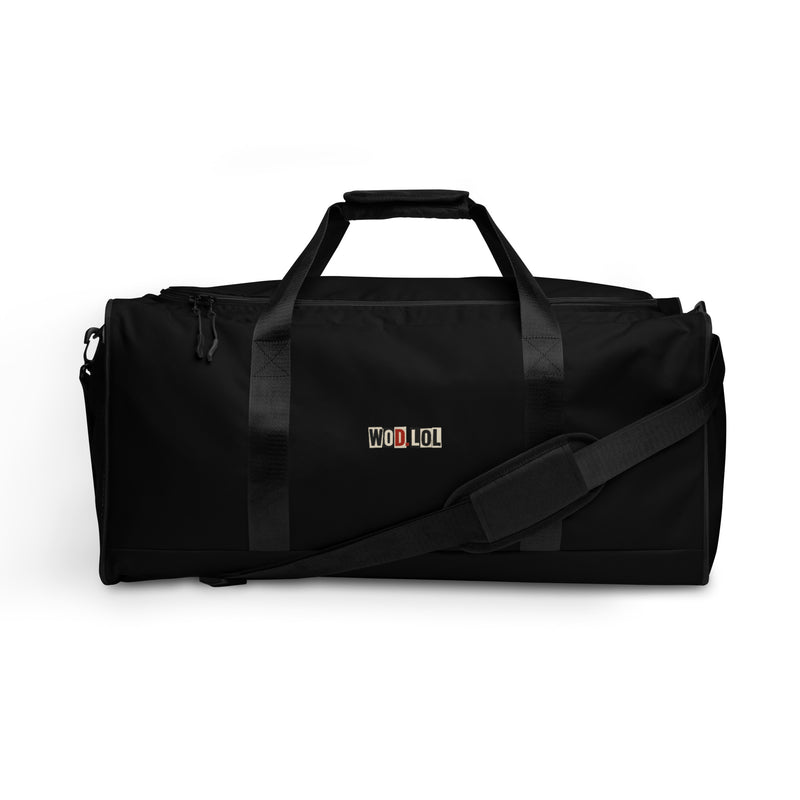
A comp in December mostly means a lot of waiting between events, often in poorly heated venues. The ideal bag:
- A thick hoodie to stay warm between WODs.
- A sherpa jacket or a coat for the outdoor warm-up and breaks.
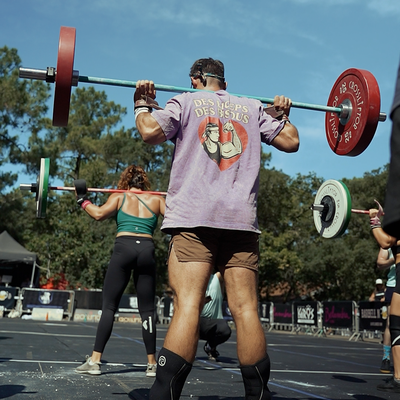
- Two spare tees: you don't start a WOD in a cold, wet top.
- Joggers to pull on over your shorts as soon as the event ends.
And if you're preparing for Hyrox Paris in December, our article on average Hyrox times will help you set your goal.
📲 Send this to the buddy who shows up at the box in shorts when it's 0 °C.
FAQ
How should you dress to exercise in winter?
Apply the 3-layer rule: a breathable top for the effort, a hoodie for the warm-up and breaks, a jacket or coat for the commute and outdoors.
What fabric weight for a warm hoodie?
From around 380 g/m², a hoodie is thick and warm. Above 400 g/m², it's ideal for outdoors and post-session in winter.
Should you keep your sweatshirt on during a WOD?
No, take it off after the warm-up. Sweating in a thick sweatshirt makes you overheat, then cool down very fast once you're wet.
Can you train outdoors when it's cold?
Yes, with a longer warm-up, the right layers and extra care for your hands and joints. If there's black ice, head inside.